A Q&A with Jackie Denton, Iditarod Teacher on the Trail™ Finalist
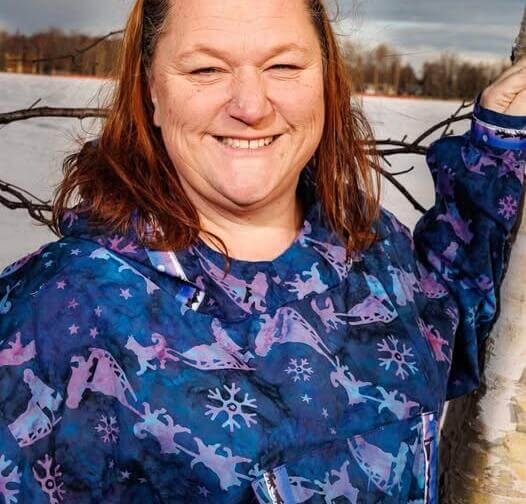
Jackie Denton first started teaching in 2008, following several years as an instructional assistant. She has taught students from 1st through 12th grades in Virginia and Indiana. Today, she teaches 7th-grade science at Indiana Digital Learning School (INDLS). Across all of those different grades, locations, and experiences, one thing has remained consistent for Jackie: using the Iditarod Trail Sled Dog Race as a teaching tool.
We spoke with Jackie about her experiences teaching, how she first started using the Iditarod as a tool, and how she uses it today with her students at INDLS.
Q: First things first, can you explain what the Iditarod is to those who may be unfamiliar?
A: The Iditarod is a long-distance sled dog race held in Alaska every March. Mushers and their teams of sled dogs travel nearly 1,000 miles from Anchorage to Nome over one-to-two weeks, often through blizzards and freezing cold conditions.
Q: How did you first hear about the Iditarod and start using it in lessons?
A: When I was an instructional assistant at a middle school in Virginia, a team of teachers used the Iditarod in all of their Core classes – math, science, social studies, and language arts. They would learn about statistics in math and read The Call of the Wild by Jack London in language arts. The whole school got involved, and there was so much excitement around it every year!
I started using the race in my classroom when I started teaching in 2008. I’ve continued to incorporate it into my lessons every year because you can truly weave it into every subject. In 2013, I was able to go to Asheville, North Carolina, to learn more about the Iditarod Education Department. I met many teachers who used the Iditarod in their classrooms, and it’s where I first heard of the Teacher on the Trail™ program.
Q: What is Teacher on the Trail?
A: The Teacher on the Trail program is a year-long opportunity for one selected educator to work directly with Iditarod EDU, teach students around the globe, and volunteer in the race itself. During the race, the Teacher on the Trail flies in small bush planes to each checkpoint to experience first-hand what goes on behind the scenes and use those experiences to craft real-time lesson ideas for educators.
Q: What led you to apply to the Teacher on the Trail program?
A: In 2018, I went to the Iditarod Educator Conference for the first time. It was a multi-day conference in Alaska where attendees could stay for the ceremonial start of the race. I attended the conference again in 2022, where I was able to become certified as an Iditarod Educator and participate in ongoing professional development. I helped with the conference in 2023, then observed workshops in 2024.

That year, I was finally ready to apply for Teacher on the Trail. It is a monstrous application – 20+ pages that you have to have bound and mailed to the selection committee, who then pick three finalists.
I’m proud to say I was one of the three finalists chosen in 2025! I attended the Iditarod Educator Conference this year, and it functions as a 10-day interview where you assist with sessions and workshops while the selection committee evaluates you. I blogged about the experience each day. Although I wasn’t ultimately chosen as Teacher on the Trail, it was an incredible opportunity. I’m glad that I can impart the experience and knowledge to boost excitement at INDLS and help other classrooms and teachers incorporate the Iditarod into their lessons.
Q: What are some of the ways you use the Iditarod to teach today?
A: I’ve been leading “IditaRead” for the whole school for the past five years – even adults get involved! From the start of the spring semester through March, students “race” to read 25 books (kindergarten through 2nd grade) or for 25 hours (3rd grade and up). Each book/hour is a checkpoint that is tracked weekly via a Google Form. We recognize the top 10 every week, and every student who participates receives a finisher’s certificate. The students who finish the race go into a drawing to win prizes, usually that I have purchased in Alaska.
For my 7th-grade science classes, I’m able to incorporate elements of the Iditarod and Alaska in multiple ways:
- Adaptation characteristics of living things by studying Alaskan huskies and Siberian huskies.
- Earthquakes and plate tectonics by examining faults along the Iditarod trail, where an earthquake could occur, and how a dog would respond, as well as a writing assignment about the Good Friday Earthquake of 1964.
- Rocks and minerals through the Alaska gold rush – many Iditarod checkpoints are ghost towns from the gold rush era.
This year, I also started an Iditarod Mushing Club for INDLS middle school students that meets once a month, leading up to different dog sled races across the country. We even have the opportunity for mushers to join us on Zoom and talk directly to the students!
Q: You’ve taught online and at brick-and-mortar schools. What makes INDLS different?
A: Moving online was meant to be, even before the pandemic forced so many more students to attend school online. It takes a while to learn how to teach effectively online, but once you get the hang of it, it’s so much easier to impart knowledge to students. You don’t have to spend nearly as much time managing the classroom and monitoring for disruptions and distractions. I can teach, and students can learn, and everything runs more smoothly.
I’ve also had so much support teaching online for INDLS. Parental support is the strongest I’ve ever experienced, and the administration always backs me up and supports me. This is how I’ve been able to pursue opportunities with Iditarod EDU and bring this special race to students in Indiana.
If you’re interested in learning about engaging curriculum and online schooling options, find more information here.
Back to BlogRelated Blog Posts

INDLS #1 in the State of Indiana for Minecraft Esports!
We’re ecstatic to announce that Indiana Digital Learning School (INDLS) has claimed the top spot in […]

College Go! Week: Make the Smart Move & Apply
If you’re a high school student in Indiana, College GO! Week is a golden opportunity you […]

College GO! Week: Unlocking the Benefits of Applying
This week is a pivotal time for high school students in Indiana, offering a unique opportunity […]