
From Chicago to Anchorage: Exploring Mushing History by Jackie Denton


Monday, February 24, 2025
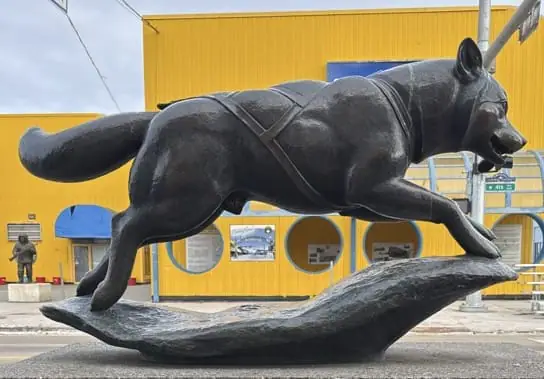
This morning, we took to downtown Anchorage for a scavenger hunt through the mushing district. This is a designated area downtown that highlights the significance of sled dogs in Alaska. Walking through the area allows you to view various murals and educational history. The central area of the mushing district is at 4th & D, which is where the Iditarod Ceremonial Start begins on the 1st Saturday of March each year. This is also the starting point for the Fur Rendezvous the weekend before. As we completed the missions assigned to us, it became apparent just how much the Iditarod and the historic Serum Run have in common, although each has its own unique legacy. The Iditarod, known as the “Last Great Race” honors the heritage of dog sledding. The Iditarod traces part of the historic trail that was once a lifeline for remote Alaskan communities.

The Serum Run of 1925 was a life-saving mission full of grit and determination. Mushers and their dog teams relayed diphtheria antitoxin across Alaska from Nenana to Nome. While one race is a test of endurance and skill, the other was a race against time and death. Both are examples of the bond between mushers and their dogs, as well as the sheer determination needed to conquer Alaska’s harsh terrain and temperatures. The Serum Run was a relay effort, with mushers passing the serum to each other down the trail to Nome. Similarly, the Iditarod racers rely on support teams, veterinarians and the countless other volunteers that make the race possible. Both events symbolize determination, survival and most importantly the unbreakable bond between musher and dog. This is why mushing remains an integral part of Alaska’s past and present.
Start your online education journey with INDLS today!
Back to BlogRelated Blog Posts

INDLS #1 in the State of Indiana for Minecraft Esports!
We’re ecstatic to announce that Indiana Digital Learning School (INDLS) has claimed the top spot in […]

College Go! Week: Make the Smart Move & Apply
If you’re a high school student in Indiana, College GO! Week is a golden opportunity you […]

College GO! Week: Unlocking the Benefits of Applying
This week is a pivotal time for high school students in Indiana, offering a unique opportunity […]